What Y Combinator’s 13 Fall 2026 Startup Priorities Mean for Founders
Y Combinator published 13 priority startup ideas for its Fall 2026 batch, including a first-time submission from Army Secretary Daniel Driscoll requesting defense technologies.
Y Combinator published its Fall 2026 Requests for Startups with 13 priorities spanning education, military technology, artificial intelligence infrastructure, and physical-world automation. The list signals where top startup investors believe transformative companies should be built—and represents an unusual moment: Army Secretary Daniel P. Driscoll became the first sitting U.S. government official to personally submit an idea to YC’s platform.
The RFS is not a requirement to apply to YC, but it serves as a market signal. YC says founders working on one of the 13 priorities can take it as extra validation to pursue the idea, and each accepted company receives $500,000 in initial funding. The Fall 2026 batch application deadline was July 27 at 8pm Pacific time, with interviews and decisions conducted through August and September for an October-December program cycle.
What Army Secretary Driscoll Wants Built
Driscoll’s entry, titled ‘The Future of American Defense,’ requested startups building low-cost interceptors, next-generation sensors, software, payloads, drones, resilient logistics systems, and advanced manufacturing capabilities for ground combat. He framed the request directly: the Army’s current acquisition process operates on 12-18 month timelines that cannot keep pace with modern threats, and he is explicitly asking founders to build modular, commercially developed systems rather than waiting for traditional Pentagon procurement.
The Secretary is pursuing a broader acquisition reform under the FUZE initiative, which aimed to invest $750 million in its first year and $765 million the following year, according to Driscoll. That includes xTechDisrupt competitions offering $500,000 prizes with 30-day development sprints. Driscoll stated the Army aims to ‘measure acquisitions not in years and billions, but months and thousands.’
Pentagon spending on the top 15 defense-tech startups has tripled since 2022, though these companies still capture less than 1% of total defense contracts. Driscoll’s direct pitch to founders suggests the military is accelerating its shift toward venture-backed innovation rather than relying solely on established contractors.
RFS By The Numbers
Y Combinator’s Fall 2026 batch application deadline was July 27, with Demo Day set for December 2. Each accepted company receives $500,000 in initial funding. Pentagon spending on the top 15 defense-tech startups has tripled since 2022.
The 13 Priority Areas: AI Meets Physical Infrastructure
Beyond defense, YC’s 13 priorities cluster around AI moving into the physical world. ‘The Primer’ targets AI-powered adaptive tutoring for children learning to read, write, and do arithmetic at scale. ‘A Cloud for Small Software’ seeks infrastructure for personal software and bespoke team tools rather than enterprise-scale applications.
Three priorities focus on human coordination with AI and robotics: ‘Multiplayer AI’ requests shared agents for teams coding together in real time or sales teams closing deals collaboratively. ‘New Operating Systems for the Physical World’ asks for software coordinating human workers, AI agents, and robots together in construction, maintenance, and logistics. ‘AI for the Aging Population’ requests voice interfaces, monitoring systems, robotics, and care coordination software to help elderly people maintain independence.
Three focus on data and verification. ‘Data for the Real World’ seeks dense physical-world data collection from sensors and robotics to make major industries precisely modelable. ‘Proving You’re Human’ addresses a new problem: systems distinguishing real humans from deepfakes and fraudulent impersonation as AI-generated content becomes convincing. ‘AI-Native Compliance Infrastructure’ requests automated regulatory monitoring and reporting that consolidates workflows across jurisdictions.
The remaining four span infrastructure and emerging sectors. ‘Compute at Sea’ proposes offshore data centers using ocean flotillas to address electricity and compute shortages. ‘AI-Powered Consumer Products for One Billion People’ asks for mass-market AI applications for health, finance, and lifestyle. ‘The Best Time to Build in Crypto’ seeks blockchain infrastructure, stablecoins, and agentic commerce. ‘Self-Maintaining APIs’ requests systems enabling API providers to automatically apply updates to customer codebases using agents.
What the RFS Means for Founders Deciding What to Build
Y Combinator explicitly stated that these ideas represent a fraction of what it funds. Founders do not need to match an RFS to apply successfully; most YC companies do not. However, YC says founders working on one of these ideas can treat it as extra validation to pursue it.
For founders weighing what to build, the RFS functions as institutional validation. A founder working on AI tutoring, military supply logistics, offshore compute, or digital identity verification can point to YC’s published priorities and argue their market is where top accelerators are actively investing. That validation can matter when recruiting engineers, pitching to other investors, or deciding whether a problem is worth two years of a founder’s life.
The timing carries weight as well. The Fall 2026 list represents the accelerator’s best read on where startup opportunities lie as of July 2026, when it was published. That forecast comes from constant conversations with founders, customers, and investors across thousands of companies. Driscoll’s participation adds another signal: the federal government is publicly signaling defense-tech needs to startup founders, rather than waiting for companies to discover problems independently.
Driscoll stated the Army aims to ‘measure acquisitions not in years and billions, but months and thousands.’
Application Process and Timeline
Founders who applied by July 27 received decisions by August 28. Those applying after the deadline still received consideration but could not expect a specific decision date. Interviews were conducted virtually in August and September, with most founders receiving decisions on the same day as their interview.
The Fall 2026 batch begins in October and runs through December, culminating in Demo Day on December 2. The program includes a three-day in-person kickoff at YC’s San Francisco campus and regular meetups throughout the batch. Each company receives $500,000 in initial funding on standard YC terms. Toward the end of the batch, YC introduces founders to its network of investors for subsequent fundraising rounds.
The Broader Signal: Where Startup Capital Is Flowing
The 13 ideas share a common thread: they assume AI agents, robotics, and sensors are becoming cheaper and more capable, and that the bottleneck is no longer building the technology but integrating it into real-world systems where humans depend on it.
Driscoll’s participation signals a second trend: government procurement is attempting to move faster. The traditional defense contracting cycle—lengthy competitive bids, congressional oversight, quarterly reporting—is not compatible with the rate at which military technology needs to change. By publishing priorities directly to startup founders and running compressed competition cycles, the Pentagon is experimenting with procurement methods that mirror venture capital’s speed.
For founders, the Fall 2026 RFS is a snapshot of what YC thinks is solvable and fundable right now. The 13 ideas are not predictions; they are the accelerator’s investment thesis made public. Founders building on any of them can point to that alignment as extra validation for the idea.
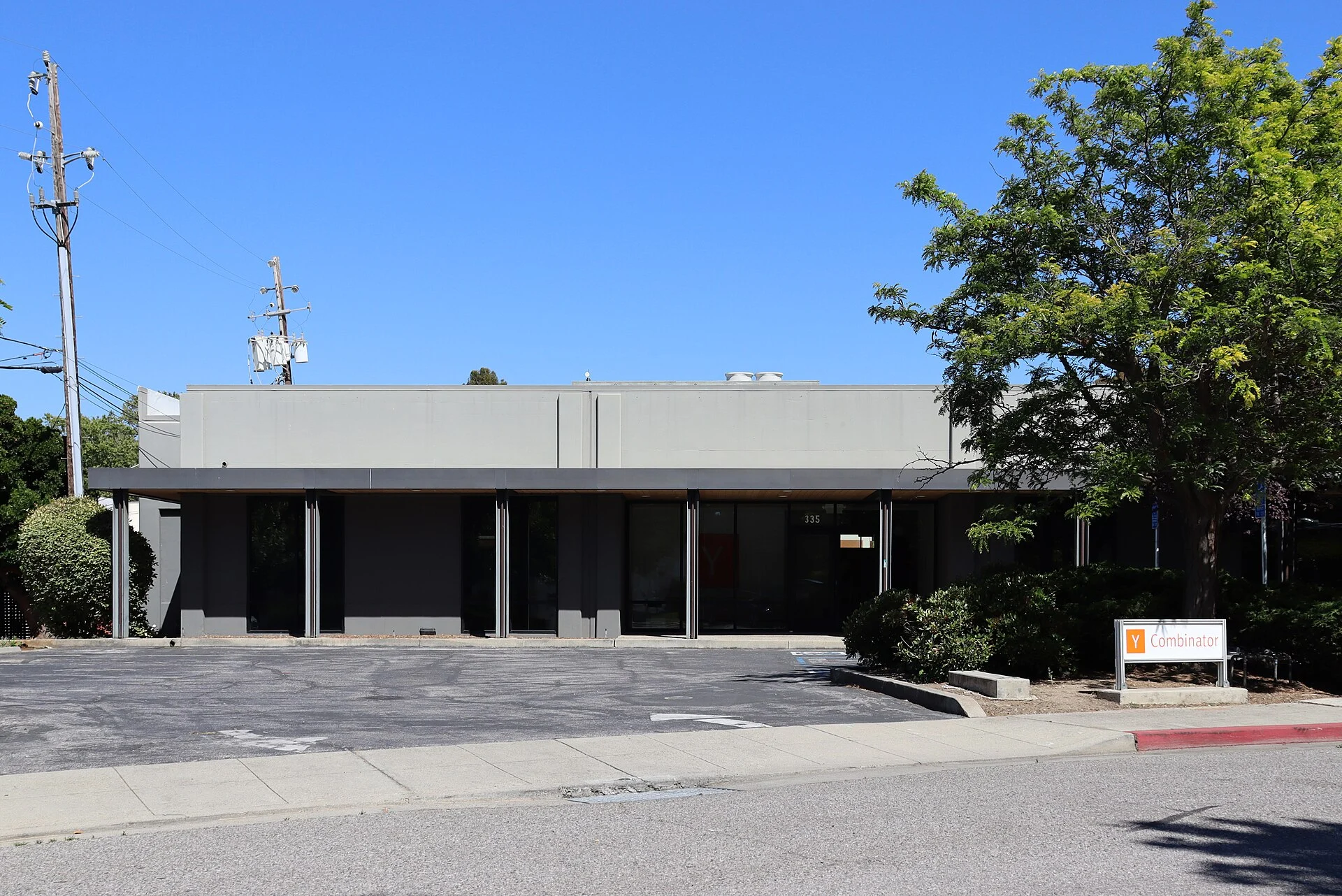
Photo: Coolcaesar · CC BY 4.0 · via Wikimedia Commons
Get more stories like this in your inbox by signing up for the EW newsletter, The Entrepreneurs Weekly’s free digest of founder stories and business news.