Australia’s proposed A$50 million limit for the refundable R&D offset is not yet law
The Budget proposes lifting the refundable R&D offset threshold to A$50 million and adding start-up loss refunds from 1 July 2028. Neither change is law yet.
Australia’s 2026-27 Budget proposes changes to the research and development tax incentive that would raise the turnover limit for the highest refundable offset from A$20 million to A$50 million. The proposed changes are not yet law, and the A$50 million threshold is not in force.
For founders with limited cash, the practical questions are what the offset pays, who can claim it, and when the rules change. The answers below draw on law firm and accounting summaries of the Budget measures, a KPMG note on Treasury’s exposure draft, and a published guide to the current rules. Where the sources differ or are silent, the article says so.
How the refundable offset works today
Under the current rules, a company with aggregated turnover below A$20 million can receive a refundable R&D tax offset. The offset equals the company tax rate plus an 18.5 percentage point premium. For a base rate entity taxed at 25%, that totals 43.5%. A company taxed at 30% that is not a base rate entity would receive 48.5%, according to a published summary of the rules at ausbusinessregister.com.au.
Refundable means the offset can be paid to the company in cash, not only used to reduce tax payable. The same summary says that where the offset exceeds the company’s tax liability, the excess is paid as a cash refund. It also says there is no annual cap on the refundable offset. An A$4 million cap was proposed in 2018, but the page says it was dropped in the 2020-21 Budget and never became law.
Only corporations can claim the incentive. The same summary says it is not available to individuals, partnerships or trusts.
Companies at or above the threshold receive only a non-refundable offset. At a 25% rate, that is 33.5% to 41.5%, depending on R&D intensity. The same summary says that if group turnover exceeds A$20 million, only the non-refundable offset is available. The summary is inconsistent on the cut-off, describing it once as turnover that exceeds A$20 million and once as A$20 million or more. The exact boundary should be checked against the legislation.
Aggregated turnover
The turnover test for the refundable offset counts connected and affiliated entities worldwide, including a foreign parent group’s turnover, according to a published summary of the current rules.
What the A$50 million threshold would change
The Budget proposes raising the turnover threshold for the highest offset rate from A$20 million to A$50 million. Mallesons lists this among the reforms that apply from 1 July 2028. KPMG’s summary of Treasury’s exposure draft confirms that the refundable turnover threshold is to rise, but it gives no figure.
Under the proposal, access to the refundable offset would be restricted during a company’s first 10 years of carrying on an enterprise, or from its first registration for the incentive. KPMG reports a 15-year restriction for entities doing research related to therapeutic goods. EY says older firms would remain eligible, but only on a non-refundable basis after that point, subject to transitional rules. Mallesons describes limiting refundability to firms under 10 years of age, for firms below the A$50 million threshold. EY also says definitions are still to be resolved, including whether the 10-year limit applies at the entity or group level.
The package also changes several other thresholds. According to EY’s summary, the minimum R&D expenditure threshold would rise from A$20,000 to A$50,000, and the annual expenditure cap would rise from A$150 million to A$200 million. Mallesons adds that research below the minimum would need to be done with a registered Research Service Provider or Cooperative Research Centre to qualify. The intensity threshold would fall from 2% to 1.5%.
EY and KPMG both say supporting R&D activities would no longer be eligible. EY describes core R&D as experimental activities aimed at generating new knowledge, the only category that would qualify.
EY says core offset rates would rise by 4.5 percentage points. The Mallesons summary describes that increase as a relative rise of around 25 to 50 per cent. KPMG says rates would increase but gives no figures. The sources reviewed do not state the refundable rate that would apply to companies under A$50 million, so that rate is not set out here.
When each change takes effect
The R&D changes and the start-up loss measure in this article are proposals, not law. Treasury released exposure draft legislation titled the Treasury Laws Amendment (Tax Reform No. 5) Bill 2026. KPMG’s note, lists three exposure drafts under that bill title: one on an innovative business capital gains tax concession, one on R&D tax incentive targeting, and one on venture capital tax incentives. The first gives early investors in eligible start-ups a 50% capital gains tax discount. KPMG gives the consultation closing date as 28 September 2026.
The R&D changes and the start-up loss measure are expected to apply from 1 July 2028, subject to the passage of legislation. Mallesons and EY both place the changes at that date. KPMG’s summary does not state a start date.
None of the sources reviewed gives an earlier start date. Until new legislation is passed and applies, the published guide describes the A$20 million threshold and the existing rates as the current rules.
Start-up loss refunds from 1 July 2028
A separate measure would let start-ups with aggregated annual turnover below A$10 million receive a refundable offset for tax losses made in their first two years of operation, according to Mallesons. The measure applies to tax years commencing on or after 1 July 2028. The Mallesons summary says the Government estimates that up to 25,000 start-ups a year would benefit.
The refund is capped. It is limited to the value of fringe benefits tax and withholding tax on wages paid to Australian employees in the loss year. The cap ties the refund to those payroll-related taxes.
The Mallesons summary describes the test by tax year. The legislated wording will set the final test.
The measure is separate from the loss carry-back change covered in the next section, which applies from an earlier date.
The proposed changes are not yet law, and the A$50 million threshold is not in force.
Other Budget measures that affect cash flow
The Mallesons summary lists a loss carry-back measure for companies with global turnover under A$1 billion. From tax years commencing on or after 1 July 2026, losses can be carried back up to two years. The measure covers revenue losses only and is limited by the franking account balance. The summary estimates it could benefit up to 85,000 businesses a year, at a cost of A$2.3 billion over five years from 2025-26.
The same summary says the A$20,000 instant asset write-off for small businesses with turnover up to A$10 million will be permanently extended from 1 July 2026.
From 1 July 2027, small and medium businesses will be able to opt in to monthly reporting and payment of PAYG instalments. The same summary says venture capital changes will raise several investee asset caps. The VCLP investee asset cap would rise from A$250 million to A$480 million.
Treating the offset in cash-flow planning, including for foreign-owned companies
Where the offset exceeds the company’s tax liability, the excess is paid in cash. The sources reviewed do not describe its accounting treatment or give a payment timetable, so both should be confirmed with an adviser before the offset is built into a forecast.
Because the sources describe the 2028 measures as unlegislated, a forecast can keep the current rules for the years before 2028 and show the proposed changes as separate scenarios until the legislation passes.
Foreign ownership changes which eligibility path applies. According to the ausbusinessregister.com.au summary, an Australian Pty Ltd or public company registered with ASIC is automatically eligible regardless of who owns it. A foreign corporation can claim only if it is an Australian tax resident or carries on business through an Australian permanent establishment in a treaty partner country. Foreign companies must also have an Australian entity and conduct core R&D activities in Australia to claim.
Aggregated turnover includes connected and affiliated entities worldwide, including the foreign parent group. The summary says that for a subsidiary of a large multinational, the parent group’s global turnover is included. A subsidiary of a larger overseas group may therefore exceed the threshold through its group. Neither KPMG nor EY addresses foreign-owned or foreign-controlled entities in the Budget measures.
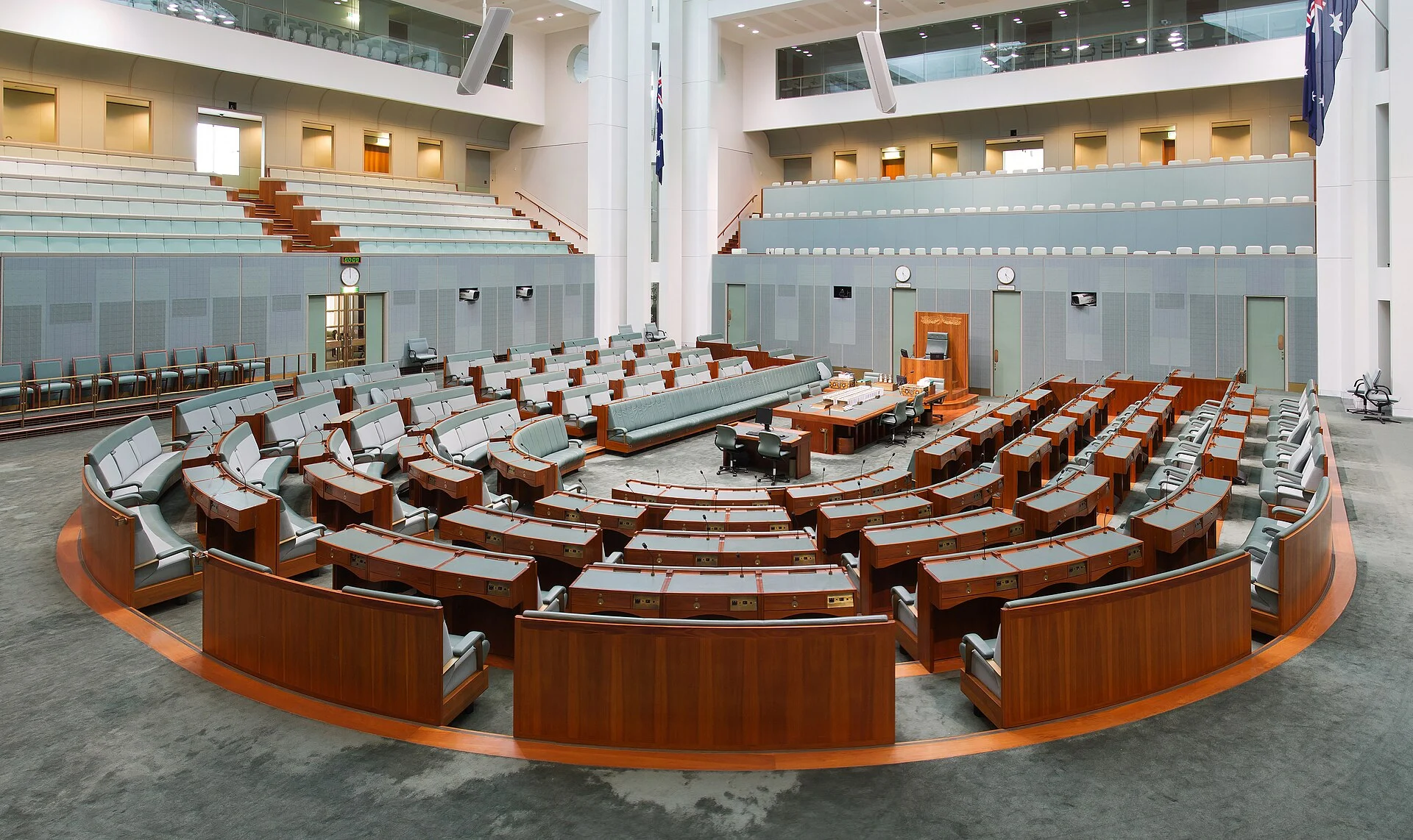
Photo: JJ Harrison ( https://www.jjharrison.com.au/ ) · CC BY-SA 3.0 · via Wikimedia Commons
Get more stories like this in your inbox by signing up for the EW newsletter, The Entrepreneurs Weekly’s free digest of founder stories and business news.