What investors require before funding a startup pitch now
Record AI funding masks a tougher bar for everyone else: paying customers, clean unit economics and disciplined burn now matter more than a good idea.
Venture investors put a record amount of money into startups in the first half of 2026, but where that money went tells a narrower story than the total suggests. Global startup funding reached $510 billion in the first six months of the year, already ahead of all of 2025’s $440 billion, according to Crunchbase. More than 70% of the capital deployed in the second quarter alone went to companies built around artificial intelligence.
Inside that number sits a case study in what it now takes to raise money. Gimlet Labs, a San Francisco company that runs AI computing workloads across different types of chips, closed a $300 million round in early September 2026 at a $3 billion valuation. The round was not built on a pitch deck alone. It was built on customer contracts, a tripled customer base and, according to the company, billions of dollars in signed revenue.
A $300 Million Round Built on Contracts
Gimlet Labs’ Series B, announced through a company release on September 4, 2026, was led by Andreessen Horowitz, with major investor Sapphire Ventures and new investors M12 and Arm, alongside existing backers Menlo Ventures and Factory. The deal brought Gimlet’s total funding to $392 million and its valuation to $3 billion. The company emerged from stealth in October 2025.
Gimlet’s product disaggregates AI models so different stages of a computing job run on whichever chip handles them best, spreading work across processors from Nvidia, AMD, Intel, Arm, Cerebras and d-Matrix. The company says the approach delivers up to 10 times the throughput of conventional setups. Andreessen Horowitz managing partner Raghu Raghuram framed the bet in architectural terms, saying “the answer isn’t just more infrastructure — it’s a better architecture.”
What investors pointed to alongside the technology was traction. Gimlet said it tripled its customer base by March 2026 and signed a top-three frontier AI lab and a top-three cloud provider as customers, generating billions of dollars in contracted revenue for its cloud service. The new capital will fund infrastructure expansion of several hundred additional megawatts and a move into custom hardware, including an inference-optimized server designed to run outside traditional data centers.
The Concentration Number
OpenAI and Anthropic together raised $217 billion in the first half of 2026, or 43% of all global startup funding, according to Crunchbase.
A Market Splitting in Two
Gimlet’s round landed inside a startup funding market that Crunchbase data shows is increasingly lopsided. OpenAI and Anthropic together raised $217 billion in the first half of 2026, or 43% of all global startup funding. Anthropic’s $65 billion round in the second quarter alone accounted for roughly half of all North American venture funding that quarter, which totaled $137.2 billion.
Beyond those two companies, 16 additional startups raised billion-dollar rounds in the second quarter, together accounting for $108.6 billion, or 53% of that quarter’s global total. Crunchbase’s North America report separately found that deal counts stayed well below levels from prior years even as dollar totals surged, with early-stage deal activity hitting its lowest point in five quarters.
Data compiled by Silicon Valley Bank shows the concentration extends into how capital is distributed by company valuation. In 2025, 33% of all U.S. venture dollars went to the top 1% of companies by valuation, up from 12% in 2022. Just 7% of capital reached the bottom half of companies by valuation. AI-labeled companies also commanded a valuation premium of 222% over non-AI businesses at Series D and later.
The New Price of Admission at Seed and Series A
Silicon Valley Bank’s data shows the companies that do raise money are arriving with more revenue than they did in the last funding boom. Median revenue at the point of raising is higher than in 2021 at every funding stage. Seed-stage companies grew revenue 322% year over year in 2025, versus 959% in 2021, but off a larger starting base — a median $363,000 in revenue compared with $156,000 in 2021.
The bank’s analysts summarized the shift as slower growth paired with more revenue and higher expectations overall. That higher bar shows up further along too: only 13% of companies that raised a Series A went on to raise a Series B within 24 months, a sign that fewer companies are clearing the traction threshold investors now expect at each stage.
Gimlet Labs sits at the extreme end of what evidence of demand can look like: a top-three frontier AI lab and a top-three cloud provider as customers, and contracts worth billions of dollars before the ink on a $300 million round had dried.
Unit Economics Move to the Center of the Pitch
An analysis by the venture research firm Value Add VC, drawing on Carta, CRV and pmf.show benchmarking data, found that the median annual recurring revenue needed to raise a competitive Series A round for an AI startup now sits near $3.5 million, up from roughly $1 million three years earlier. Investors are also looking for 10% to 15% month-over-month growth, equivalent to roughly two to three times annual revenue growth.
Retention and margin are scrutinized more closely too, according to the same analysis. Net revenue retention above 120% is treated as the standard for AI startups, compared with 110% for traditional software companies. Gross margins for AI startups at Series A average around 52%, below the 70% to 80% typical of non-AI software, largely because GPU inference and AI-model API costs — estimated at roughly $230,000 per $1 million of revenue — sit directly in the cost of goods sold.
Burn multiple, a measure of net cash burned per dollar of new recurring revenue, has become a headline metric where it barely registered before. A separate Value Add VC comparison of 2021 and 2026 benchmarks found that a burn multiple under 2 is now expected, compared with a metric that was largely ignored in 2021. Typical revenue at the point of raising a Series A has risen from a range of zero to $1 million, often before any revenue at all, to $1 million to $2 million now, while the share of seed companies that go on to raise a Series A has fallen from roughly 30% to somewhere between 15% and 20%.
What This Means for Founders Pitching Now
Gimlet Labs sits at the extreme end of what evidence of demand can look like: a top-three frontier AI lab and a top-three cloud provider as customers, and contracts worth billions of dollars before the ink on a $300 million round had dried. Most founders are not raising at that scale, but the underlying expectation is the same one showing up across Crunchbase, Silicon Valley Bank and Value Add VC’s data — proof that someone is already paying, and paying enough to justify the unit economics behind the business.
Crunchbase’s North America and global figures for the first half of 2026 differ — $392 billion and $510 billion respectively — because they measure different geographic scope, not because the underlying data conflicts. What is consistent across the sources is the pattern beneath the totals: fewer, larger checks going to companies that can already show revenue, retention and a burn rate that does not require an act of faith to underwrite.
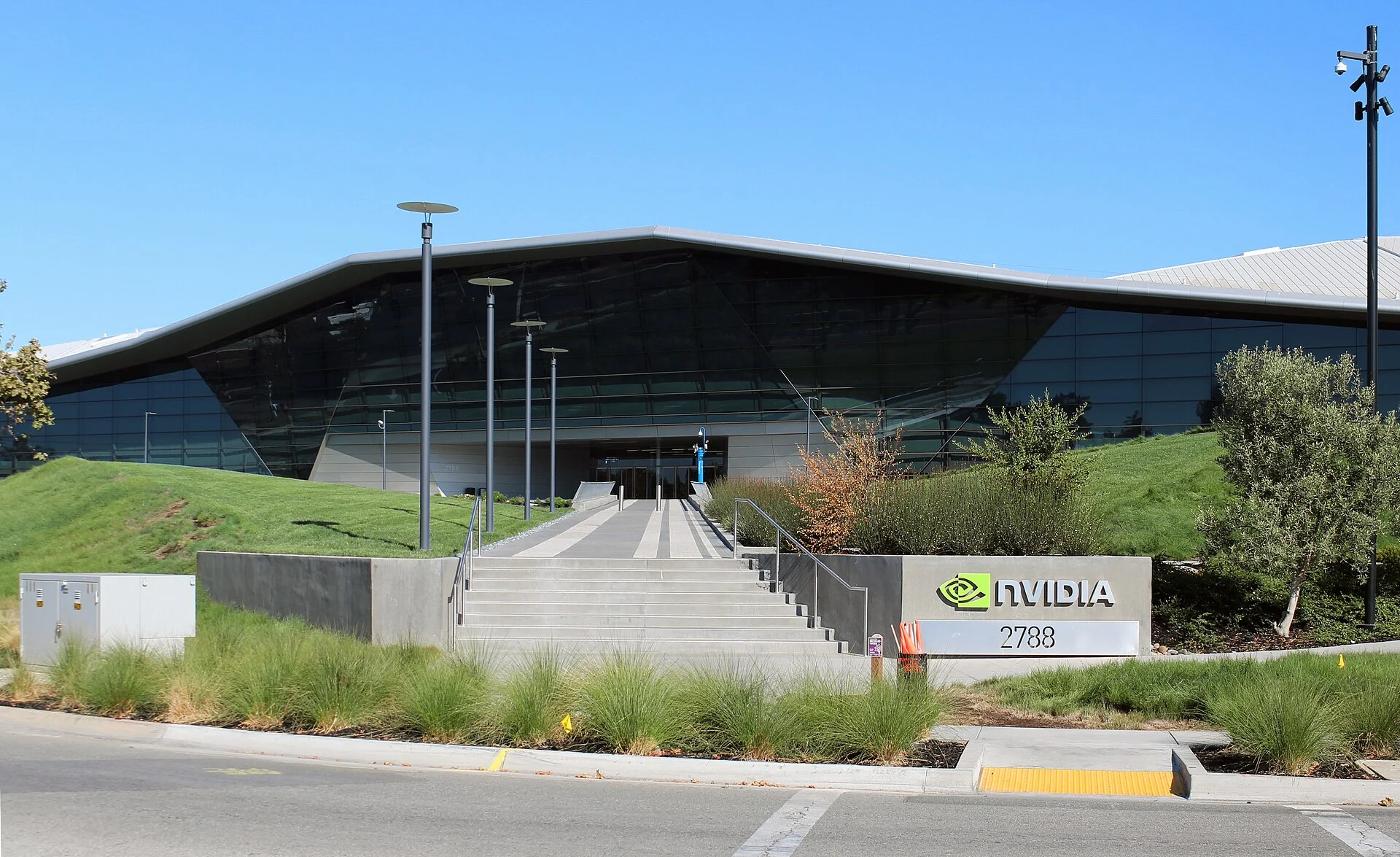
Photo: Coolcaesar · CC BY-SA 4.0 · via Wikimedia Commons
Get more stories like this in your inbox by signing up for the EW newsletter, The Entrepreneurs Weekly’s free digest of founder stories and business news.