Would You Follow You? The Leadership Question Every Entrepreneur Should Ask
Phillip Moore, founder and publisher of Limitless Legacy Magazine, on the leadership question every entrepreneur should ask themselves.
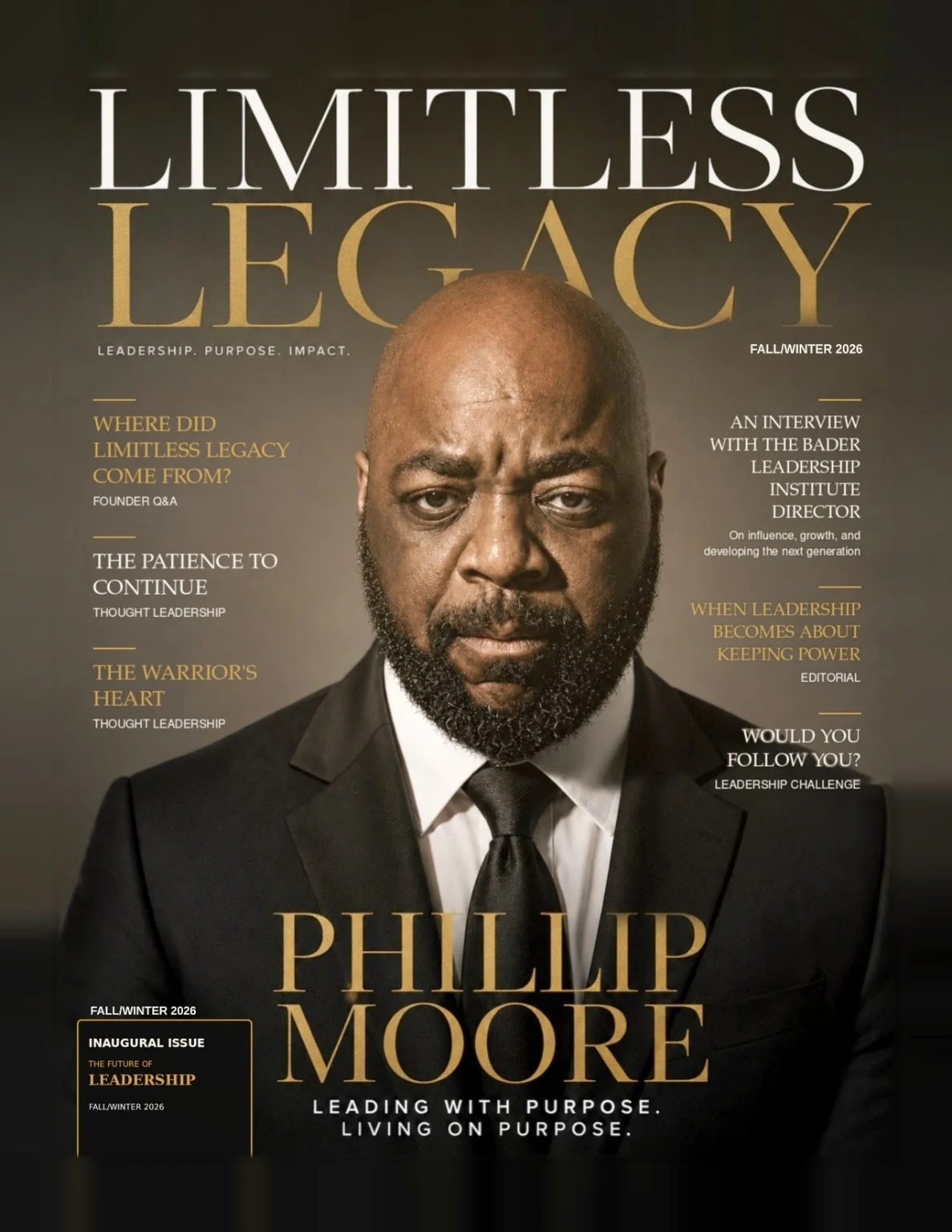
By Phillip Moore
Leadership is easy to evaluate when we’re watching someone else. We can identify what the CEO should have done differently. We can criticize how a manager handled a difficult employee. We can explain why an organization lost the trust of its workforce.
But there’s a harder question that deserves our attention: If you weren’t the leader, would you want to follow you?
It’s a question every entrepreneur, executive, and business owner should consider, particularly when things are going well. Because success doesn’t automatically make someone a good leader.
The Difference Between Authority and Influence
Building a successful business requires determination, confidence, and the willingness to make difficult decisions. But as a company grows, the leadership challenge changes.
You’re no longer responsible only for producing results. You’re also responsible for creating an environment where other people can produce results, develop their abilities, and contribute meaningfully.
A title can give you authority. A company’s ownership documents can give you control. Neither automatically gives you the trust of the people working beside you.
That trust develops through the everyday experience of your leadership. Do you listen when someone disagrees with you? Do you acknowledge mistakes? Do you give others credit when they deserve it? Do your decisions reflect the values you publicly promote?
These behaviors may appear small, but collectively they shape the culture of an organization.

What Happens When Performance and Character Collide?
Consider a situation. You lead a growing business. One of your employees consistently produces extraordinary results. This person generates revenue, solves complicated problems, and has become extremely valuable to the organization.
There’s only one problem. Other employees report that this individual regularly interrupts coworkers, takes credit for their ideas, and humiliates team members. After investigating, you discover the concerns are legitimate.
Now you face a difficult decision. Removing the employee could hurt short-term performance. Keeping the employee without meaningful accountability could continue damaging your workplace culture. What would you do?
Many leaders say they value respect, teamwork, and integrity. But those values become meaningful only when protecting them costs something.
If you excuse destructive behavior because an employee produces exceptional results, what message are you sending everyone else? You’re communicating that performance matters more than people. And eventually, that message becomes part of your organizational culture.
Leadership becomes much easier when doing the right thing costs us nothing.
The Leadership Mirror
One of the most valuable habits entrepreneurs can develop is regularly examining how others experience their leadership. Consider five questions:
- Can I have difficult conversations without humiliating or intimidating people?
- Am I willing to admit when someone else has a better idea?
- Do my everyday decisions reflect the values I claim to believe in?
- Can employees disagree with me without fearing retaliation?
- Am I developing people who may eventually become better leaders than I am?
These questions aren’t intended to produce a perfect score. They’re intended to reveal the distance between the leader we believe ourselves to be and the leader other people experience. And that distance matters.
An entrepreneur may believe they’re decisive while employees experience them as dismissive. A manager may believe they’re maintaining high standards while the team experiences constant fear of making mistakes. A business owner may speak frequently about loyalty without realizing that loyalty must extend in both directions.
Self-awareness requires the courage to examine those differences.
Your Legacy Is Bigger Than Your Business
Entrepreneurs understandably measure growth through revenue, profitability, customers, and market position. Those metrics matter. But they don’t tell the entire story.
What happens to the people who work for you? Do they become more confident, capable, and prepared for greater responsibility? Do they feel respected when they bring forward difficult information? Are you building an organization that can function effectively without depending on your constant involvement?
These questions reveal another dimension of success. The strongest leaders don’t simply accumulate influence. They use their influence to develop others. They understand that building something lasting requires more than protecting their position. It requires creating opportunities for other people to grow.
The Question Worth Asking
The next time you evaluate your business performance, take a moment to evaluate your leadership with the same seriousness. Don’t ask only whether your company is growing. Ask whether your people are growing with it.
Don’t ask only whether your employees follow instructions. Ask whether they’ve developed genuine trust in your judgment and character. And don’t ask only what your business will become. Ask what the people around you will become because you led them.
Because eventually, the title changes. The position changes. Someone else occupies the office. What remains is the impact your leadership had on others.
So ask yourself one more time: Would you follow you?

About the Author
Phillip Moore is the founder, publisher, and editor of Limitless Legacy Magazine, a quarterly publication exploring leadership, influence, professional growth, and the development of future leaders. Through his work in counseling, leadership development, and organizational consulting, Moore focuses on helping individuals lead with intention and create meaningful, lasting impact.
Learn more: Limitless Legacy Magazine | Limitless Living Consulting | Limitless Living on Instagram | 30-Day Achievement Reset System
Get more stories like this in your inbox by signing up for the EW newsletter, The Entrepreneurs Weekly’s free digest of founder stories and business news.