How SBIR and STTR Grants Fund Startups Up to $30 Million Without Equity
The Small Business Innovation Research program awards startups and small companies non-dilutive grants up to $2.15 million to develop innovative technology. Here's how to qualify and apply.
The federal Small Business Innovation Research and Small Business Technology Transfer programs—SBIR and STTR—award grants to startups and small companies developing innovative technology. Unlike venture capital, which demands equity stakes and board seats, SBIR and STTR are non-dilutive. Founders retain full ownership while developing early-stage research and prototypes. Since 2026, when Congress reauthorized the programs through 2031, the pathway has expanded to include awards up to $30 million for companies ready to scale proven concepts.
Eleven participating federal agencies fund the programs, coordinated by the Small Business Administration, with published research topics spanning nearly every technology sector. Small companies search once for a published research topic matching their work, submit a proposal by the deadline, and if awarded, receive cash without surrendering ownership.
Phase I: Proving the Concept
Phase I is designed to establish feasibility. A startup proposes a novel technology idea and receives a grant to test whether it actually works. As of April 2026, Phase I awards cap at $323,090 for up to 12 months of work. The grant covers salaries, equipment, and materials needed to build a prototype or gather preliminary data proving the core concept is sound.
The application requires a detailed technical plan, commercialization strategy, and evidence that the founders have thought through both the science and the market. Agencies accept proposals only on published topics; unsolicited ideas are rejected. Topics vary by agency and shift with funding cycles, but remain live on the central SBIR.gov site, where founders can search by keyword—”battery recycling,” “mental health,” “supply chain”—to find matches across all participating agencies.
Agencies score proposals on technical merit, the strength of the team, and commercialization potential. Phase I awards often go to founders who can show they’ve already spent their own time and money validating the basic idea.
Award Timeline and Amounts
Phase I grants cap at $323,090 for up to 12 months. Phase II awards reach $2,153,927 for 24 months. Phase II application and award typically take about twelve months. Strategic Breakthrough Awards, introduced in April 2026, offer up to $30 million over four years for companies with prior Phase II success.
Phase II: Full Development
Phase II is where most meaningful R&D happens. Companies that complete Phase I successfully and deliver promised results can apply for Phase II funding, which jumps to up to $2,153,927 and runs for 24 months. Phase II grants cover full research and development: building working prototypes, collecting performance data, refining designs, and assembling evidence that the technology can actually be manufactured and sold.
Not all Phase I awardees advance to Phase II, and not all Phase II proposals are accepted. Agencies expect to see genuine progress from Phase I and a credible path to commercialization. A startup working on a medical device, for example, would use Phase II to move from bench-top prototype toward a version ready for regulatory testing. A software startup might build out the full platform, user interface, and early customer deployment.
Phase II is the gateway to commercialization because most venture investors and corporate partners review Phase II accomplishments before deciding to write a check. A Phase II award signals that an independent federal agency has already vetted the technology and the team. Founders often use Phase II funding to hire permanent employees, establish a lab or manufacturing space, and attract later-stage investment.
Who Qualifies
To receive an SBIR or STTR award, the company must be for-profit, organized in the United States with a physical business address there, and have fewer than 500 employees including all affiliates. More than 50 percent of the company must be directly owned and controlled by U.S. citizens or permanent resident aliens.
All research and development work must take place in the United States. Subcontracting portions to universities or outside research firms is permitted, but the small business must control the overall project. In STTR awards specifically, the small business must perform at least 40 percent of the work and the research institution at least 30 percent.
Nonprofit organizations cannot directly receive SBIR or STTR awards, though they can participate as research partners within a small-business-led proposal. Sole proprietorships are eligible, provided they meet the standard eligibility requirements. Before applying, founders must obtain a Unique Entity ID from SAM.gov, the federal entity registration system.
Finding and Submitting Proposals
SBIR.gov aggregates all open solicitations. Each of the eleven participating agencies posts topics quarterly or annually. Founders search by technology keywords to identify relevant topics, then download the complete solicitation document, which explains what the agency wants built, how proposals are scored, and the exact deadline. Topics range from specific technical challenges—”extend battery life 50 percent while reducing weight”—to broader research areas—”artificial intelligence for agriculture.”
No agency accepts unsolicited ideas. A founder must find a published topic matching their work, follow the solicitation’s exact submission format, and meet the deadline. Submitting to an unrelated topic, even if the technology is strong, results in rejection.
Small errors—a missing signature, an incorrectly named budget category, a proposal that exceeds the page limit—trigger administrative rejection before technical review. The SBA and agencies publish tutorials and webinars to walk founders through the process. Most Phase I proposals are reviewed by external scientists or engineers with deep expertise in the topic. Agencies typically score on technical merit, team qualifications, and commercialization likelihood.
A Phase II award signals that an independent federal agency has already vetted the technology and the team.
Strategic Breakthrough Awards: A New Pathway
Beginning in 2026, agencies managing programs with annual extramural research spending above $100 million can offer Strategic Breakthrough Awards of up to $30 million over as many as four years. These awards target companies that already hold a prior SBIR award — described in some accounts as requiring a completed Phase II, and in others as either a Phase I or Phase II award — and have proven their technology works, but lack the capital to scale production or move toward commercial market entry. This is designed to address what analysts call the “valley of death”—the stage between a successful prototype and profitable manufacturing, where many promising startups stall.
Strategic Breakthrough Awards require applicants to demonstrate 100 percent matching funds from non-SBIR sources: new private capital or qualifying non-SBIR federal funding. A startup seeking a $20 million Strategic Breakthrough Award must commit $20 million of its own capital or outside funding in parallel. Because of the matching requirement and the scale of development needed, Strategic Breakthrough Awards are not aimed at first-time SBIR applicants. They suit founders with a Phase II success already published, customer validation from the market, and a clear capital raise underway.
Why Founders Choose SBIR and STTR Over Venture Capital
The core advantage is ownership. A $300,000 Phase I grant does not dilute equity, impose board governance, or demand an exit strategy within ten years. Founders retain full control and can pursue whatever commercialization path makes sense—licensing to an established company, building an independent business, or even abandoning the technology if the market changes.
Because agencies fund research topics aligned with federal interests—climate, defense, health—founders can tap into government R&D agendas without pitching Wall Street-friendly narratives about 10x returns. A founder building software to help clinicians diagnose rare diseases can pursue that mission directly through NIH SBIR funding, rather than reshaping the business to maximize venture returns.
SBIR awards also carry credibility. An agency’s endorsement signals to customers, partners, and later investors that an independent expert has already validated the technology and team.
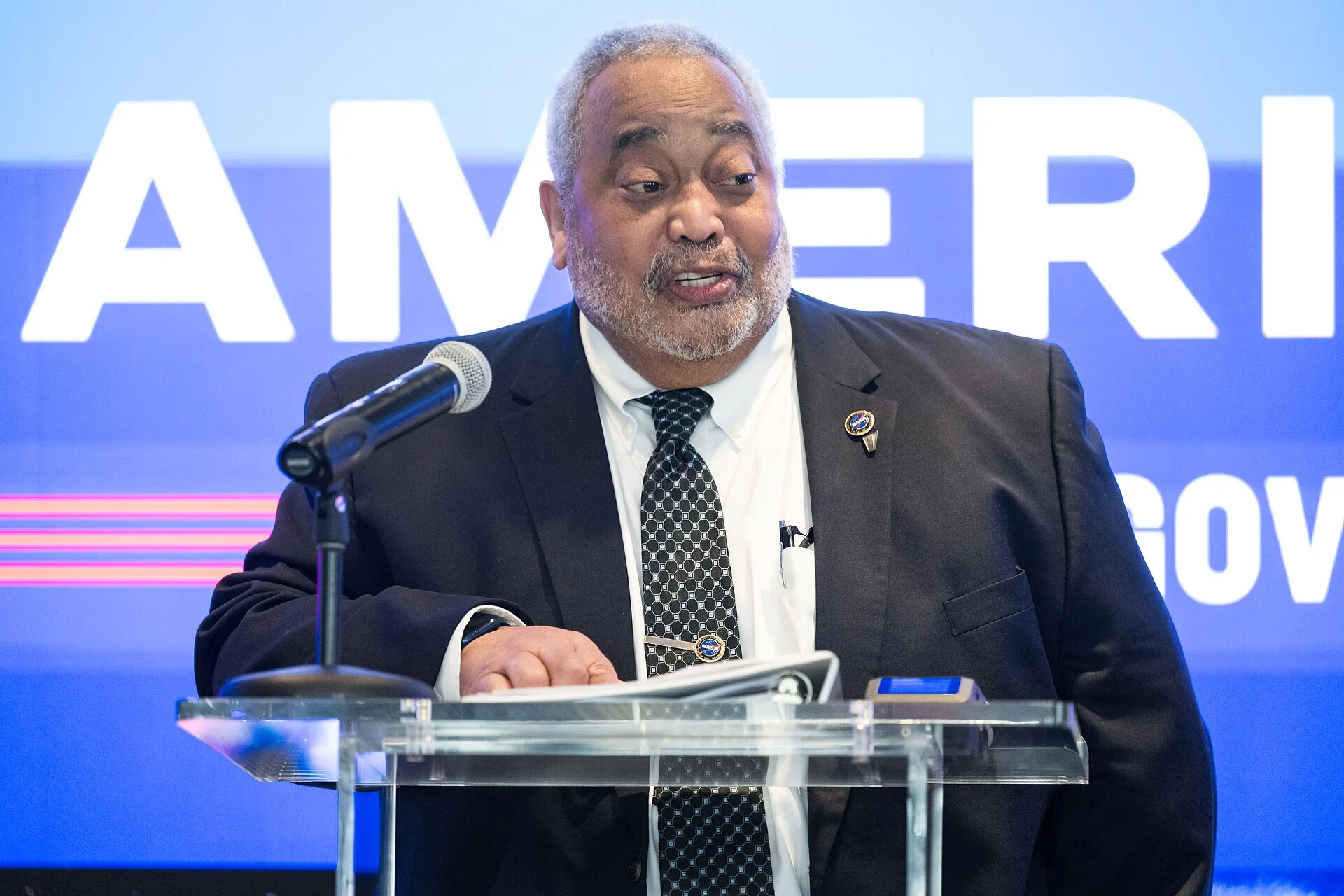
Photo: NASA Headquarters / NASA/Aubrey Gemignani · Public domain · via Wikimedia Commons
Get more stories like this in your inbox by signing up for the EW newsletter, The Entrepreneurs Weekly’s free digest of founder stories and business news.