
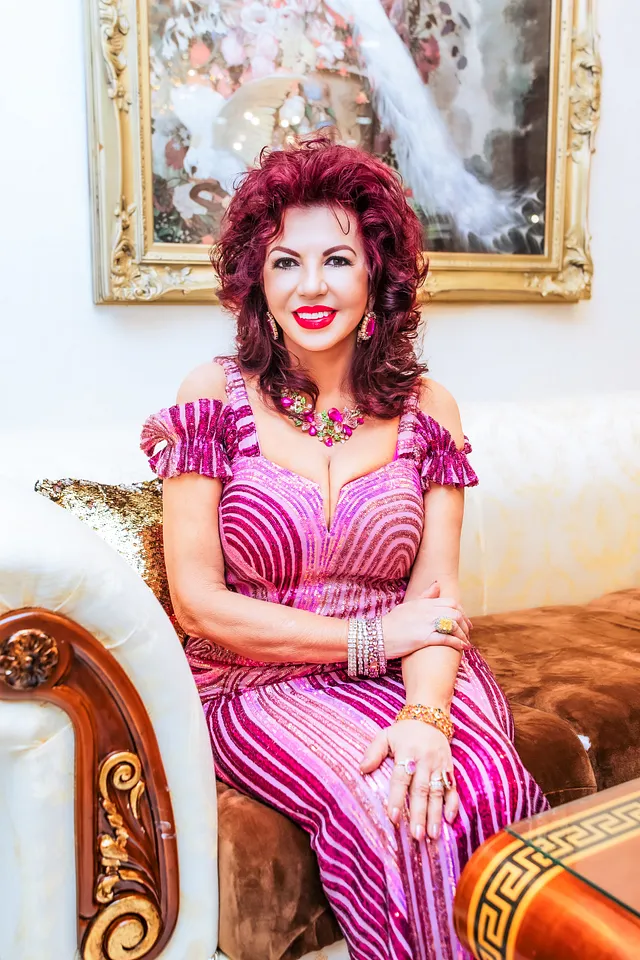
DR. CARMEN HARRA: The Woman Redefining Emotional Power: Why Understanding What We Feel May Be the Key to Changing How We Live, Lead and Love
You Are What You Feel: Dr. Carmen Harra on Emotional Sovereignty, Personal Power and the Business of Becoming Your Best Self
In a world increasingly defined by stress, uncertainty, constant stimulation and emotional overload, Dr. Carmen Harra believes we have been asking the wrong question.
Instead of asking, “What is wrong with me?” she wants people to ask, “What are my emotions trying to tell me?”
That distinction is at the heart of Dr. Harra’s newest book, You Are What You Feel: Redefining Your Emotional Identity for Greater Intelligence, Awareness, and Understanding, published by American Real Publishing.
A psychologist, bestselling author, intuitive counselor and internationally recognized transformational teacher, Dr. Harra has spent more than three decades helping people understand the emotional patterns that influence their relationships, choices, confidence and direction in life.
Now, with her newest book, she introduces readers to a concept she calls emotional sovereignty — the ability to experience emotions deeply without allowing those emotions to control our behavior, decisions or destiny.
“Your emotions are not random,” says Dr. Harra. “They are messages from the mind, the body, and the soul. When you learn how to understand them, you stop being ruled by your past and begin to create your future consciously.”
WHEN EMOTION BECOMES IDENTITY
One of the central ideas in You Are What You Feel is that repeated emotions can become so familiar that we begin to mistake them for personality.
Someone may describe themselves as anxious, overly sensitive, controlling, guarded, overly giving or someone who simply “takes care of everyone else.”
But Dr. Harra challenges readers to look deeper.
What if some of those characteristics aren’t personality traits at all?
What if they are emotional survival patterns developed through childhood experiences, relationships, trauma, family conditioning, fear or learned expectations?
That question becomes the doorway to transformation.
Dr. Harra explains that emotions can influence how people love, communicate, make decisions, establish boundaries, respond to conflict and envision their futures. Once those patterns become conscious, people have the opportunity to make different choices.
The goal isn’t to stop feeling.
It is to become more skillful with what we feel.
“Peace is not the absence of feeling,” Dr. Harra says. “Peace is the presence of skill.”
THE FOUR EMOTIONAL ARCHETYPES
A particularly compelling element of the book is Dr. Harra’s four emotional archetypes.
They include the person who expresses emotions intensely and quickly; the person who suppresses pain and remains silent; the person who absorbs the emotions of everyone around them; and the person who manages vulnerability through control.
The archetypes are not intended to place people into rigid categories. Instead, they act as mirrors.
They give readers an opportunity to recognize themselves without judgment and begin asking why they respond to life in certain ways.
For entrepreneurs, executives, parents, partners and anyone navigating high-pressure environments, that self-awareness can be particularly powerful.
The emotional patterns we carry don’t simply appear in our private lives. They can influence leadership, communication, negotiations, business relationships, risk-taking and the ability to handle failure and change.
THE ENTREPRENEURIAL SIDE OF EMOTIONAL INTELLIGENCE
For Entrepreneur Weekly readers, Dr. Harra’s message extends well beyond personal development.
Entrepreneurship requires decision-making under uncertainty. It requires resilience,
self-confidence, adaptability and the ability to manage relationships — often while dealing with rejection, financial pressure, competition and fear.
That makes emotional intelligence more than a personal wellness concept. It can become a professional advantage.
A business leader who understands their own emotional triggers may be better equipped to pause before reacting, communicate more effectively and make decisions based on clarity rather than fear.
Dr. Harra’s philosophy is that personal transformation and professional success are not separate journeys.
The person you are in the boardroom is still the person carrying your emotional history into the room.
Understanding that history can change how you lead.
FROM REACTION TO RESPONSE
One of the book’s most important distinctions is the difference between reacting and responding.
Reaction is automatic. Response contains awareness.
Dr. Harra teaches readers to identify the emotional loops that repeatedly produce the same outcomes and then create enough awareness to interrupt them.
The book provides assessments, exercises, guided reflections, client stories and practical tools designed to help readers recognize hidden beliefs, strengthen boundaries and develop greater emotional intelligence.
It culminates in a structured 21-day alignment practice, giving readers a tangible framework for moving from awareness toward action.
WHY THIS MESSAGE MATTERS NOW
The timing of You Are What You Feel is significant.
People are living in an environment of unprecedented stimulation. Technology keeps us connected, but it can also keep us emotionally activated. Professional demands compete with
family responsibilities. Social media creates comparison. News cycles produce anxiety. Relationships are increasingly complicated by constant communication.
Many people appear successful on the outside while privately struggling with emotional exhaustion.
Dr. Harra’s answer is not to eliminate emotion. It is to understand it.
“When you change your relationship with emotion, you change the trajectory of your life,” she says.
A CAREER BUILT ON TRANSFORMATION
Dr. Harra’s work has crossed the boundaries of traditional psychology and personal development. Her career has explored emotional healing, relationships, spirituality, intuition, karma, destiny and personal empowerment.
That intersection has allowed her to reach audiences looking for something beyond conventional self-help.
Her approach combines psychological insight with spiritual awareness and practical tools — a combination that has become a defining element of her work.
With You Are What You Feel, she is taking that philosophy into a new chapter.
The book asks readers to reconsider one of the most fundamental assumptions they make about themselves:

What if the way you feel isn’t simply who you are?
What if it is information?
What if it is an invitation to understand yourself more deeply?
And what if learning to work with your emotions — rather than being controlled by them — could change the way you live, love, lead and build your future?
For Dr. Carmen Harra, that is the real meaning of emotional sovereignty. You don’t have to become less emotional.
You have to become more conscious.
And that may be one of the most powerful forms of personal and professional transformation available to us.
DR. CARMEN HARRA
10 Questions Every Entrepreneur Weekly Reader Should Ask
1. Your new book is called You Are What You Feel. What inspired you to write this book, and what do you hope readers understand about themselves after reading it?
I was inspired to write You Are What You Feel because, after more than three decades of working with people, I noticed how often we try to change our lives by changing our thoughts while overlooking the emotions underneath those thoughts. We tell ourselves to think positively, be more disciplined, stop worrying, or simply “let it go.” But if an emotional pattern has been operating beneath the surface for years, positive thinking alone rarely changes it. I wanted to help people understand that their emotions are not obstacles to overcome or weaknesses to hide. They are information. They tell us something about what we have experienced, what we have learned to expect, what we fear, and what we believe we need in order to feel safe. Over time, these emotional patterns can become so familiar that we mistake them for our personality.
My greatest hope is that readers come away realizing that they are not trapped by the emotional patterns they have developed. You may have learned to people-please, suppress your feelings, over-control situations, or react intensely—but you are not those patterns. Once you can
observe an emotional pattern rather than automatically identify with it, you create something incredibly powerful: choice. And choice is where transformation begins.
2. You introduce the concept of “emotional sovereignty.” What exactly does that mean, and how can someone practice emotional sovereignty in everyday life?
Emotional sovereignty is the ability to fully experience your emotions without allowing them to take control of your behavior, your decisions, or your sense of self. It does not mean becoming detached or suppressing what you feel. In fact, it is the opposite. Emotional sovereignty means becoming sufficiently connected to yourself that you can
feel deeply while remaining grounded.
We practice it in very ordinary moments. Someone says something that hurts us, and instead of immediately responding, we pause. We notice the anger, the fear, or the defensiveness that has surfaced and ask, What is this feeling telling me? We give ourselves enough space to understand the emotion before deciding what to do with it. That pause between feeling and action is where emotional sovereignty lives. The goal isn’t to eliminate emotional reactions; it is to develop the ability to choose our response. When we can say, “I am feeling angry,” rather than “I am an angry person,” we have already created some distance between ourselves and the emotion. That distance gives us freedom.
3. You write that people can mistake survival patterns for personality. Can you explain how something like anxiety, people-pleasing, control or emotional suppression can become part of someone’s identity?
Survival patterns begin as adaptations. At some point in our lives, a particular emotional strategy may have helped us feel safer, more accepted, or more in control. Perhaps being agreeable prevented conflict. Staying quiet kept us from being criticized. Controlling everything created a sense of security when life felt unpredictable. Anticipating every possible problem helped us feel prepared.
The difficulty is that what once protected us can eventually imprison us.
When a pattern is repeated often enough, it becomes automatic. Eventually, we stop saying, “I learned to behave this way because of what I experienced,” and start saying, “This is just who I am.” The people-pleaser thinks, “I’m just a caring person.” The controlling person thinks, “I’m just responsible.” The emotionally suppressed person may believe, “I’m simply not very emotional.” Meanwhile, the underlying fear or unmet need remains hidden.
This is why emotional awareness is so important. We need to distinguish between our authentic personality and the protective behaviors we developed along the way. You can be caring without abandoning yourself. You can be responsible without controlling everything. You can be strong without suppressing vulnerability. Healing begins when we recognize that a survival strategy is something we learned—not something we are.

4. Your book identifies four emotional archetypes. What are they, and why is recognizing your emotional archetype such an important first step toward change?
The four emotional archetypes are the Expressor, the Suppressor, the Empath and the Controller. The Expressor experiences emotions intensely and tends to release them quickly and openly. The Suppressor internalizes feelings, often carrying pain silently rather than expressing it. The Empath is highly attuned to other people’s emotions and can take on feelings that don’t actually belong to them.
And the Controller manages vulnerability by trying to create certainty, predict outcomes, and maintain control over circumstances.
None of these archetypes is inherently good or bad. Each represents a way of navigating emotional life, and each can have strengths. The Expressor may be passionate and authentic. The Suppressor may be composed and resilient. The Empath may be deeply empathetic. The Controller may be organized and capable.
The problem begins when an archetype becomes a rigid emotional identity rather than a pattern we can consciously choose.
Recognizing your archetype is important because awareness interrupts automaticity. Once you can recognize, “This is what I tend to do when I feel threatened,” you can begin asking, “Is this response still
serving me?” The archetypes aren’t labels meant to limit us; they are mirrors meant to liberate us. They give us a language for understanding ourselves—and we cannot transform a pattern we cannot see.
5. For entrepreneurs and business leaders, emotions can affect everything from decision-making to negotiations and leadership. How can understanding our emotional patterns make us more effective professionally?
We often like to imagine that business decisions are purely rational, but every decision-maker brings an emotional history to the table. Fear can influence whether we take a risk. Insecurity can affect how we negotiate. The need for approval can make us say yes when we should say no. A fear of failure can cause us to remain in a situation long after it has stopped serving us.
Entrepreneurs and leaders have an enormous amount of responsibility, which makes emotional awareness particularly valuable. If you don’t understand your own
emotional patterns, you can unintentionally allow them to influence your leadership style, hiring decisions, negotiations, partnerships, and even your relationship with success.
Emotional intelligence allows you to recognize the difference between intuition and fear, confidence and defensiveness, healthy ambition and the need to prove yourself.
The most effective leaders aren’t people who never experience fear, frustration, or uncertainty. They are people who can experience those emotions without allowing them to dictate their behavior. When you understand yourself, you become less reactive, more discerning, and more capable of creating an environment in which other people can perform at their best.
6. What is the difference between reacting emotionally and responding consciously — and what can someone do in the moment when they feel themselves being triggered?
A reaction is immediate. A response is intentional. When we react, an emotion takes the driver’s seat.
Something happens, we interpret it through our existing
emotional patterns, and we respond before we’ve had the opportunity to understand what is actually happening within us. A conscious response creates a moment of space between the trigger and the action.
When you feel triggered, I recommend beginning with something very simple: pause. Don’t immediately send the message, make the decision, end the relationship, or say the thing you may later regret.
Then identify what you’re feeling. Is it anger? Fear? Rejection? Shame? Helplessness? Ask yourself, What happened, and what am I making it mean? That second question is particularly important because our emotional
response is often influenced not only by what happened but by the meaning we attach to it.
Take a breath, give your nervous system a moment to settle, and remind yourself that feeling something does not require you to act on it immediately. You can honor an emotion without obeying it. Sometimes the most powerful response is the one you choose after you’ve given yourself enough time to see clearly.
7. You bring together psychology, intuition and spirituality in your work. How do these different disciplines work together, and why do you believe this combination is important to personal transformation?
I don’t see psychology, intuition, and spirituality as competing systems. I see them as different ways of understanding the human experience.
Psychology helps us understand our conditioning, behavior, relationships, beliefs, and emotional patterns. It gives us a framework for understanding why we respond to life in particular ways. Intuition allows us to listen to the quieter information within us—the feeling that something is aligned or misaligned even when we cannot immediately explain why. Spirituality invites us to consider the deeper questions of meaning, purpose, connection, and consciousness.
For me, true transformation occurs when we are willing to look at the whole person rather than reducing ourselves to one dimension.
At the same time, I believe it is important to remain grounded. Spiritual insight should not replace
psychological awareness, and intuition should not be used as an excuse to avoid facts or accountability. These perspectives can complement one another beautifully when they are approached with discernment.
The result is a more complete understanding of ourselves: what we think, what we feel, what our experiences have taught us, what our intuition is telling us, and ultimately what kind of life we want to create.
8. After more than three decades of working with people, what is one emotional pattern you see repeatedly that prevents people from creating the life or relationships they truly want?
One of the most pervasive patterns I see is people abandoning themselves in order to maintain a sense of safety, acceptance, or connection.
It can look different from person to person. Someone may remain in an unhealthy relationship because they are afraid of being alone. Someone may continually say yes to everyone else while quietly resenting it. Someone may work relentlessly to prove their worth. Someone else may avoid taking a meaningful risk because failure would challenge the identity they have built around being competent or successful.
What all of these behaviors have in common is that the person has learned to prioritize an emotional
need—approval, security, control, belonging, or certainty—over their own deeper truth.
The irony is that abandoning yourself rarely creates the peace you are seeking. It usually creates resentment, exhaustion, anxiety, or a feeling that something is missing. I believe one of the greatest acts of emotional maturity is learning that you can love people without losing yourself, succeed without constantly proving your worth, and create security without controlling everything. Your life begins to change when you stop asking, “What do I have to do to be accepted or safe?” and start asking, “What is true for me?”
9. Your book concludes with a 21-day alignment practice. Why did you choose 21 days, and what can readers realistically expect to experience when they commit to the process?
I chose 21 days because transformation requires more than insight—it requires repetition. We can have a profound realization and still return to the same emotional habits the next morning. The purpose of the 21-day practice is to give readers a structured period in which they can consciously observe, interrupt, and replace those patterns.
The practice is not about becoming a completely different person in three weeks. It is about becoming more aware of the person you already are and beginning to live from that awareness consistently.
Over those 21 days, readers are invited to pay attention to the relationship between their thoughts, feelings, and reactions. They begin identifying what triggers them, where they abandon themselves, what beliefs are driving their behavior, and what a more aligned response might look like.
What I hope readers experience is greater clarity. They may notice that they react differently to situations that once automatically triggered them. They may become more aware of their boundaries, communicate more consciously, or recognize emotional patterns that previously seemed invisible.
The greatest transformation is often not dramatic. It is the moment when you realize, “I have a choice here.” That awareness can become the foundation for lasting change.

10. After decades of helping people transform their lives, what have you learned about success, happiness and personal power that you wish you had known earlier in your own life?
What I wish I had known earlier about success, happiness, and personal power is that these elements are already within reach because all the resources you need are within you.
These three things work hand in hand, and I believe the first thing you must develop is personal power. When you have a genuine sense of personal power, fear begins to lose its authority over you. You become more willing to
challenge yourself, take meaningful risks, and pursue your full potential.
That personal power makes success possible—not necessarily success as defined by fame, recognition, or wealth, but the deeply personal experience of accomplishing something you once wondered whether you could achieve. There is a particular kind of happiness that comes from knowing, I set my mind to something, and I did it.
And then something beautiful happens: success creates more personal power. The more you prove to yourself that you can trust yourself, the more confident you become in your ability to navigate whatever comes next.
So I no longer see success, happiness, and personal power as separate destinations. They are interconnected. Strengthen one, and you begin to strengthen the others.
Ultimately, the greatest success is not becoming someone else or acquiring everything the outside world tells you to want. It is discovering who you are, trusting your inner resources, and having the courage to live from that truth.
COVER PULL QUOTE
“Your emotions are not random. They are messages waiting to be understood. When you change your relationship with emotion, you change the trajectory of your life.”
— Dr. Carmen Harra
ABOUT THE BOOK
You Are What You Feel: Redefining Your Emotional Identity for Greater Intelligence, Awareness, and Understanding
By Dr. Carmen Harra
Published by American Real Publishing
- Released June 5, 2026
- 260 pages
- ISBN-13: 978-1969063510
Available on Amazon.
